

April 2024
L&B Lab – Volume 5 Issue 1
As aviation planners, we focus heavily on enhancing airport terminals for departing passengers. However, this neglects the needs of arriving passengers and prioritizes efficiency over comfort. Airlines, government agencies, and airport managers also prioritize departing passengers, leading to an imbalance in passenger experience. With airports expanding to handle more passengers, we must consider whether we are neglecting arriving passengers and if there are opportunities to shift industry norms toward a more balanced approach. While this paper focuses on a single idea dedicating select close-in terminal gates to arriving flights – it isn’t meant as a standalone fix for an unapologetic arrivals process. Rather, when coupled with other potential out-of- the-box adjustments to the status quo, it could play a role in a comprehensive solution aimed at restoring the aviation industry to its desired glamorous past, reminiscent of a time when traveling by plane was seen as romantic.
The Problem: Longer Walking Distances are Eroding the Passenger Experience
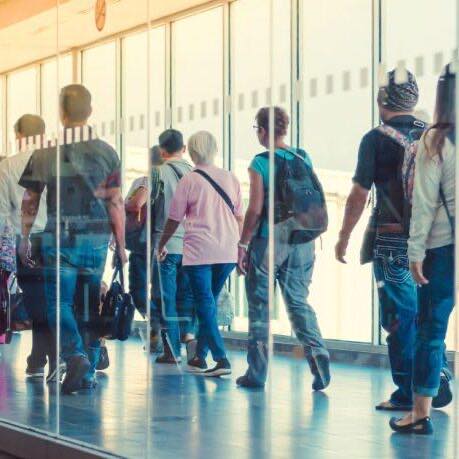
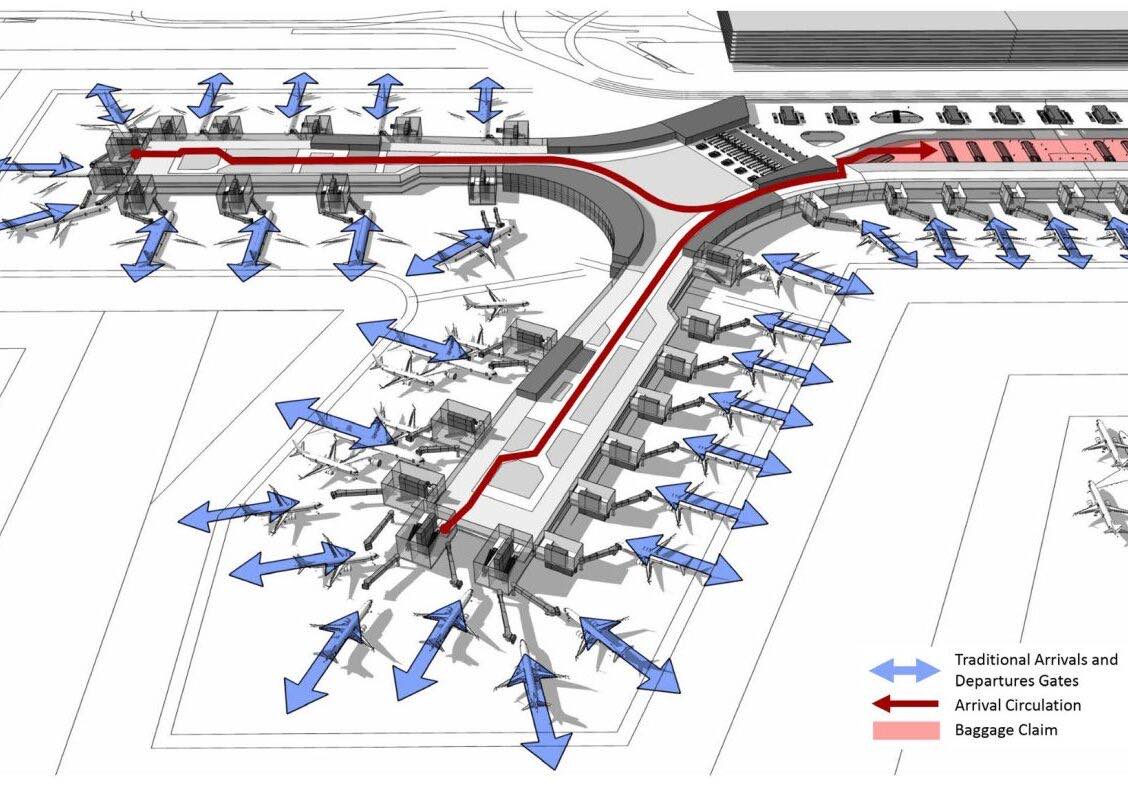
With passenger volumes again rising, airports are struggling with expanding capacity, often resulting in longer concourses, introducing entirely new concourses, expanding airport infrastructure, and increasing passenger walking distances. In some cases, these distances extend over a mile between arrival gates, baggage claims, and passengers’ preferred mode of landside transportation. Have we reached a tipping point where the arriving passenger’s experience has become severely compromised, particularly for vulnerable demographics such as the elderly and disabled? Moreover, the evolution of security measures and increased walking distances has mostly ended the once cherished tradition of greeting loved ones at the gate, underscoring the necessity for solutions that reconcile airport operations with passenger experience.
The Current Condition: How Gate Operations Undermine the Customer Experience
The current approach to airport gate operations adopts a uniform model where all gates are treated equally, serving both departing and arriving aircraft. However, this arrangement presents challenges for passenger flow and overall experience. Upon arrival, passengers often navigate through congested queues and hold rooms filled with departing passengers waiting to board. Gates located at the ends of concourses require the longest walking distances for both arriving and departing passengers. While departing passengers may tolerate these distances to access amenities and shopping, they do nothing for the already fatigued arriving passengers who seek a quick exit from the airport. Conversely, gates closer to terminals offer shorter walking distances, enhancing the arrival experience but potentially limiting exposure to revenue-generating opportunities for departing passengers. This disparity also impacts meeters/greeters, who find it challenging to find their loved ones amidst confined concourse exits and crowded baggage claim halls. Consequently, greeters opt to stay in their vehicles, leading to increased roadway congestion and inefficient use of airport facilities.
The Idea: Remember the Arriving Passenger
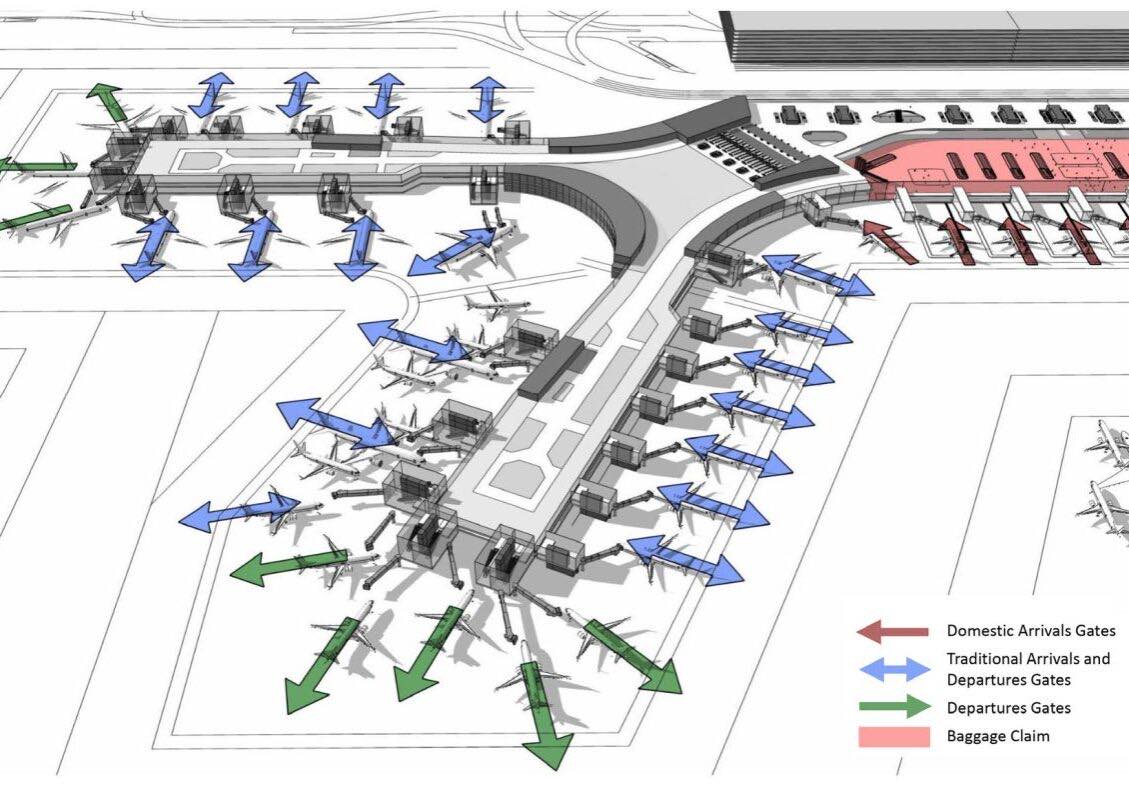
What if all gate locations weren’t treated equally? Picture a world where specific gates are allocated exclusively for arrivals and departures. Gates located adjacent to the terminal could be designated solely for arrivals. These gates would offer a seamless transition for passengers coming off their aircraft, leading them directly into baggage claim where their loved ones could warmly greet them. On the other hand, the most distant gates at the ends of the concourses could be reserved solely for departures, removing congestion, streamlining the boarding process, and enhancing the pre-flight experience for departing passengers. The gates that fall in between these two extremes could still be used for both arrivals and departures, as they already are today, knowing that dedicated arrival gates would not align with the operational strategies of all airlines, particularly those employing Low-Cost Carrier (LCC) models that prioritize rapid aircraft turnarounds and use all gate locations interchangeably.
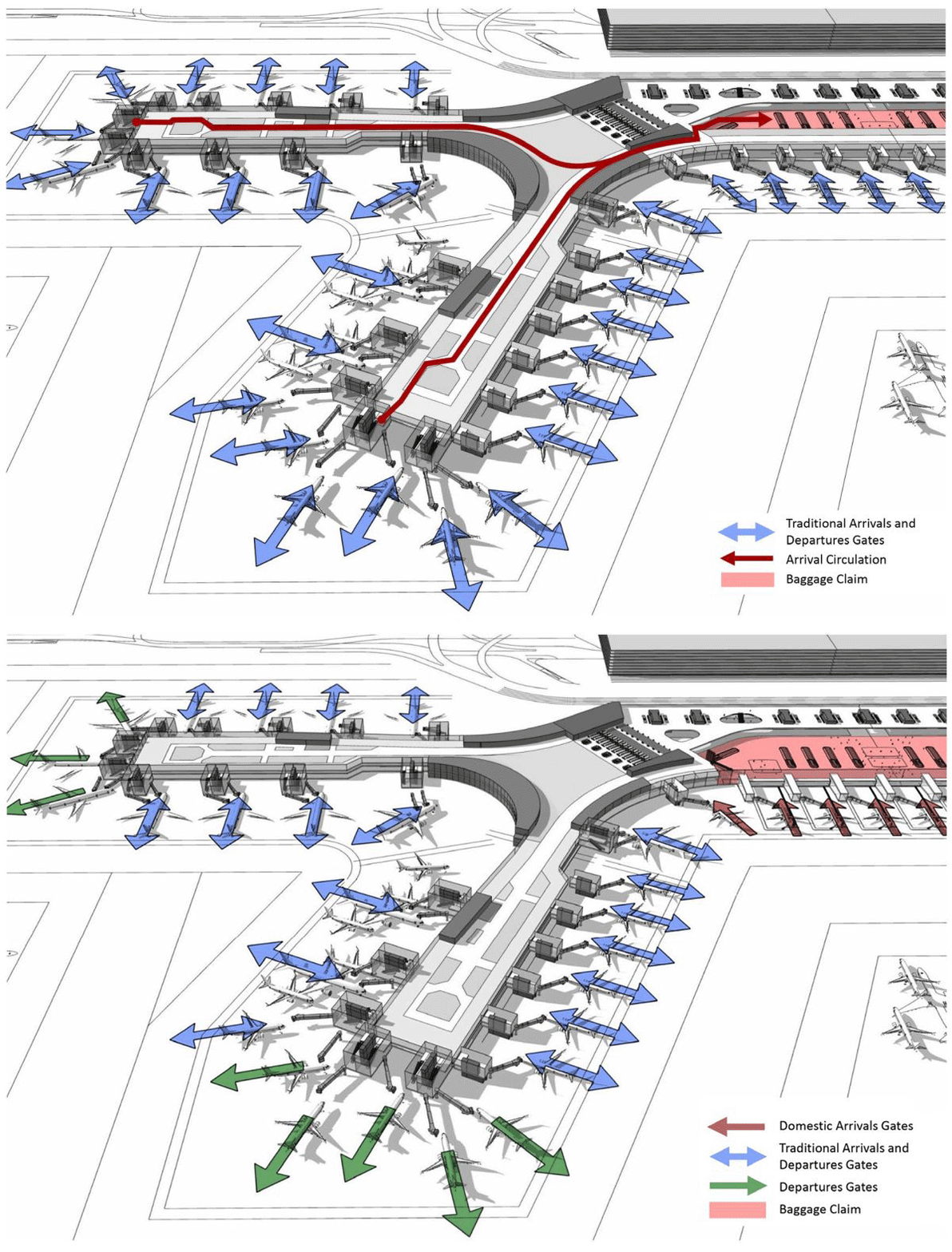
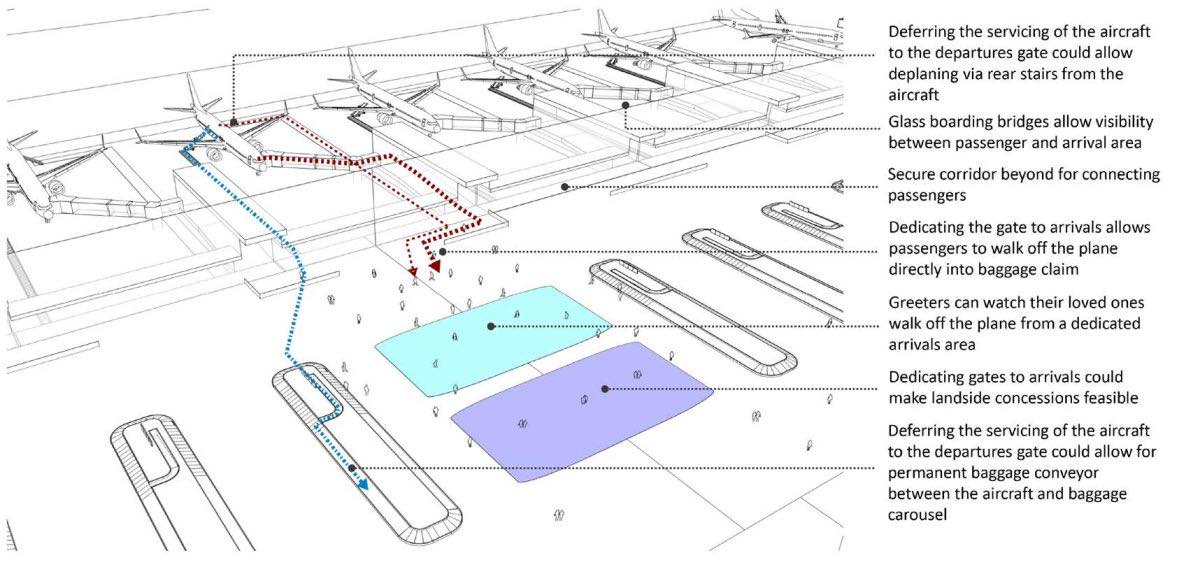
Similarly, dedicating specific gates at the ends of concourses as departures-only gates also offers a range of benefits that enhance the departure passenger experience and streamline operations:
1. Reduced Congestion and Space Optimization:By removing the arrivals sequence from departure gates, there’s no need to preserve circulation space in the boarding area and hold rooms for arriving passengers, significantly reducing congestion and allowing for the optimization of valuable space in the hold rooms at the ends of concourses, which are traditionally congested areas.
2. Improved Passenger Experience and Revenues:By reducing the volume of arriving passengers in the concourse, there’s less need to accommodate as much two-way circulation, allowing for either the reduction of concourse width or the reallocation of space to leasable concessions, enhancing the passenger experience and airport revenues.
The Challenges: Addressing Real Operational, Institutional and Regulatory Issues
While the idea offers the possibility of real benefits, its feasibility hinges on addressing significant challenges. One of the primary challenges in making changes to airport facilities is matching the funding sources of improvements with the beneficiaries of those improvements. For example, if an airline decides to bear the costs associated with implementing the concept, it would do so to attract more passengers to fly with it due to the enhanced level of service it provides. On the other hand, if an airport chooses to incentivize airlines to adopt the concept, they would do so to capture revenue from the benefits outlined earlier.
The operational costs and potential revenue impacts for airports and airlines must be carefully analyzed and weighed against the benefits for passengers. Additionally, considerations such as increased aircraft movements, longer ground times, and crew duty limitations would require strategic planning and collaboration among stakeholders. Specifically, the following challenges would have to be addressed:
1. How will the concept affect ground times?
The time required for towing between arrival-only and departure-only gates and the delay in safety checks, servicing, and fueling will extend the ground times for the aircraft using the arrival-only gates. Airlines would need to factor in extra time into their schedules to accommodate this concept, potentially affecting flight scheduling and crew duty limitations. It’s important to recognize that this concept may not be suitable for every airline’s operational model or every flight within an airline’s operations. Airlines may need to selectively identify the types of flights to best accommodate the additional ground times and mitigate any negative impacts on their schedules.
2. Will additional employees be needed to accommodate arrival-only gates?
In the current condition, extra employees may be required to facilitate aircraft movement between arrival only and departure-only gates, increasing operational costs and staffing complexities. However, technological advancements, such as automated Ground Support Equipment (GSE) networks controlled by a central ramp controller, can potentially reduce the staffing levels needed to move aircraft.
3. How will the concept of arrival-only gates change airport operating costs and airline revenues?
Extended ground times and the need for additional staff to implement this concept could reduce the number of flights each aircraft can undertake in a day and increase airline overhead costs. Balancing operational expenses with reduced flight frequency per aircraft may pose challenges, leading airlines to grapple with the financial implications of this concept. However, it’s important to acknowledge that this approach might not be suitable for every type of flight. Airlines may need to selectively identify suitable flights for assignment to these gates to mitigate potential revenue losses.
4. How can airports mitigate apron congestion caused by increased aircraft towing between gates?
Implementing this concept would lead to more aircraft movements on the airfield, presenting logistical hurdles for both airlines and ground handlers. However, investing in a future automated GSE system could significantly help alleviate these challenges.
5. Do arrival-only gates reduce overall gate utilization?
The extended ground times at the departures-only gates could reduce overall gate utilization. The number of gates designated for arrival-only, departure-only, and traditional operations must be analyzed and balanced with flight schedules to avoid bottleneck situations. In the event of operational breakdowns where the airport faces a shortage of available gates, it’s worth noting that all departure-only gates would still be able to accommodate arrivals, and all arrival-only gates could function as Remain Overnight (RON) positions.
6. Can the safety checks, normally performed upon aircraft arrival, be postponed until the aircraft is towed to a departure gate?
In addition to the potential impacts on ground times, postponing the safety check inspections until the aircraft reaches the departure gate could potentially impact safety protocols. Collaborating with regulatory authorities, industry stakeholders, and the airlines to develop compliance frameworks and operational guidelines is required to ensure the seamless implementation of this process.
Conclusion:
This concept is not intended to be universally applied to all gate locations. Instead, it could complement traditional operations by selectively implementing specialized operations at several specific gate locations. It also allows for the retention of flexibility in operations, particularly at intermediate gates where conventional procedures remain optimal.
Additionally, we recognize that the arrival-only gate concept does not align with the operational strategies of all airlines, especially those employing LCC models that prioritize rapid aircraft turnarounds and use all gate locations interchangeably. However, Origin and Destination (O&D) airports may find value in this approach as they prioritize enhancing the arriving passenger’s experience and creating a unique sense of place.
This concept presents an opportunity for airlines and airports to differentiate themselves by offering a superior level of service, thus enhancing their brand image. This differentiation can be particularly valuable in competitive markets where airlines compete for passenger loyalty and market share, and airports compete for rankings in passenger polls. There’s also potential for further exploration of this concept for international arrivals, especially where access to the sterile corridor is limited, and airlines and airports aim to minimize walking distances between the aircraft and the Federal Inspection Service (FIS).
Opportunities abound for reimagining airline and airport operations and passenger processing, with the overarching goal of enhancing the passenger experience across all facets of the airport journey. By fostering a collective effort to deliberate and rethink the status quo, we aspire to force progression in the aviation industry.